By Nathan Morley
The United Nations Office for the Coordination of Humanitarian Affairs (OCHA) has called for urgent intervention to address the deepening humanitarian crisis in Sudan, nearly two years into a devastating conflict.
Dire Humanitarian Conditions
Edem Wosornu, OCHA’s Director of Operations and Advocacy, underscored the severity of the crisis, stressing that the ongoing conflict between the Sudanese Armed Forces (SAF) and the paramilitary Rapid Support Forces (RSF) has inflicted immense suffering on civilians. According to OCHA, over half of Sudan’s population—approximately 24.6 million people—are experiencing acute hunger (UN OCHA, 2025).
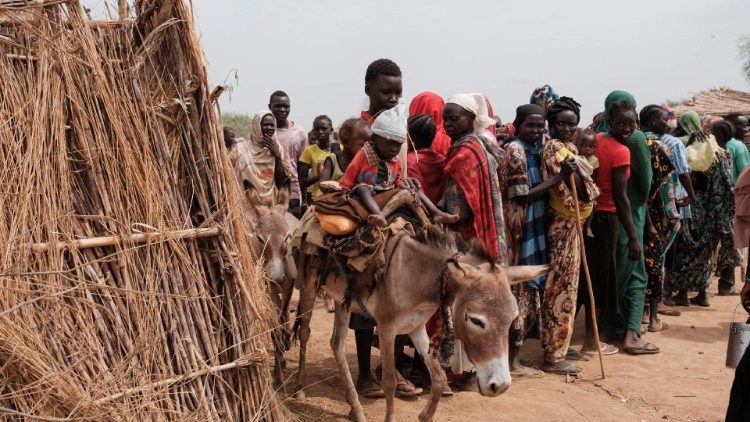
The conflict has displaced more than 12 million people, with 3.4 million fleeing across Sudan’s borders to neighboring countries. In addition, health services have collapsed, millions of children are out of school, and reports of widespread sexual violence continue to rise (UN OCHA, 2025).
Violence Continues Despite UN Resolutions
The situation is particularly alarming in North Darfur, including the Zamzam displacement camp and the state capital, El Fasher. Despite the adoption of UN Resolution 2739 (2024), which called for the RSF to end its siege of El Fasher, civilians in the region remain under attack (United Nations, 2024).
Satellite imagery has confirmed escalating violence, including the use of heavy weaponry and the destruction of key market facilities. Humanitarian organizations warn that hundreds of thousands of civilians in Zamzam camp are facing famine conditions (Médecins Sans Frontières, 2025).
Aid Disruptions and Escalating Famine
The worsening security situation has forced Médecins Sans Frontières (MSF) to suspend its operations in Zamzam camp, citing security threats to its personnel. The World Food Programme (WFP) has also suspended its voucher-based food assistance program. Despite confirmed famine conditions in Zamzam since August 2024, WFP has only been able to transport a single convoy of humanitarian supplies into the camp (WFP, 2025).
UN agencies warn that unless immediate assistance reaches those affected, thousands could face starvation in the coming weeks (UN OCHA, 2025). Wosornu reiterated OCHA’s call for urgent international action to prevent further loss of life and alleviate the suffering of millions in Sudan.
 Society of Jesus' social apostolate