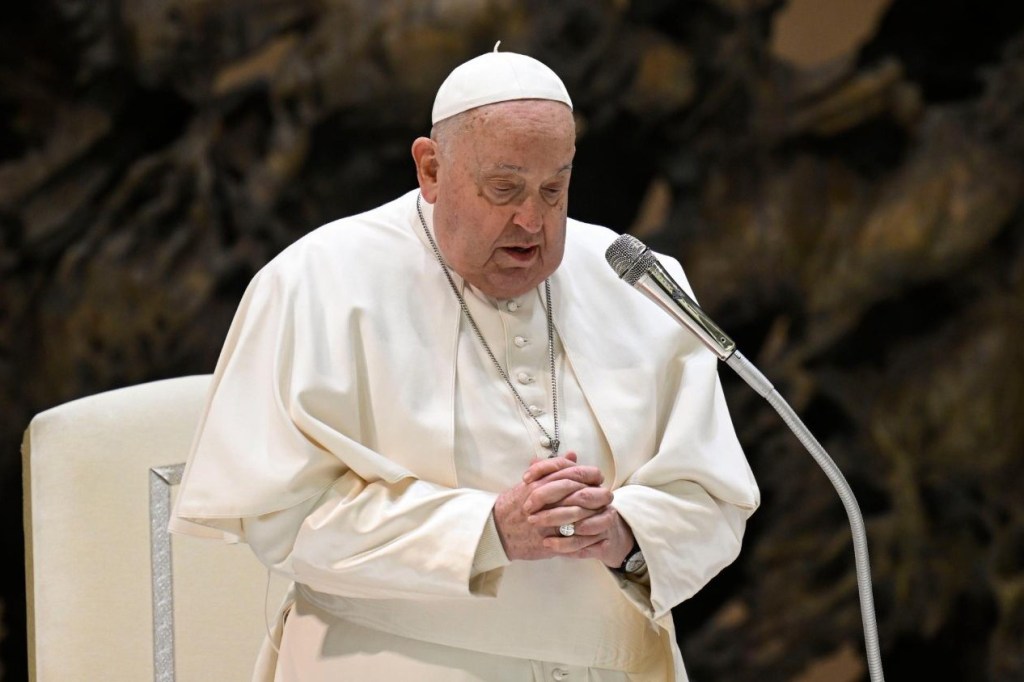
Pope Francis has urged U.S. bishops to critically assess immigration laws and policies through the lens of human dignity and fundamental rights, particularly in light of ongoing mass deportations of undocumented migrants.
In a letter published on February 11, the pope acknowledged a nation’s right to protect itself from individuals who have committed serious crimes. However, he warned against equating a migrant’s undocumented status with criminality, emphasizing that a well-formed conscience would reject such an association.
“The act of deporting people who in many cases have left their own land for reasons of extreme poverty, insecurity, exploitation, persecution, or serious environmental deterioration damages the dignity of many men and women, and of entire families, placing them in a state of particular vulnerability and defenselessness,” Pope Francis wrote.
The pontiff called upon Catholics and all people of goodwill to evaluate public policies not merely by their legality but by their adherence to the dignity and rights of every person.
A Call for Compassion and Inclusion
Pope Francis’ message comes amid shifting U.S. immigration policies, including an increase in deportations, a development that many U.S. bishops have openly criticized. The pope commended the bishops for their advocacy on behalf of migrants and refugees, assuring them of divine blessings for their commitment to defending those society often deems “less valuable, less important, or less human.”
Invoking the intercession of Our Lady of Guadalupe, he prayed for a society that is “fraternal, inclusive, and respectful of the dignity of all.” He also warned against narratives that discriminate against migrants and refugees, causing unnecessary suffering.
“This is not a minor issue: An authentic rule of law is verified precisely in the dignified treatment that all people deserve, especially the poorest and most marginalized,” he stated.
While acknowledging the importance of regulating migration, Francis stressed that policies built on force rather than truth and equality would ultimately fail.
The ‘Ordo Amoris’ and a Gospel-Based Approach
The pope also reflected on the Catholic concept of ordo amoris—or “rightly ordered love”—referencing its role in the immigration debate. He challenged the notion that Christian love merely expands outward from personal interests, emphasizing instead that human dignity is realized through relationships, especially with the most vulnerable.
“The true ordo amoris that must be promoted is that which we discover by meditating on the parable of the Good Samaritan,” he said, underscoring the need for a love that fosters universal fraternity without exception.
Jesus the Refugee
Francis further grounded his message in the life of Christ, reminding the faithful that Jesus himself experienced migration when the Holy Family fled to Egypt to escape King Herod’s persecution. He cited Pope Pius XII’s Exsul Familia Nazarethana, which upholds the Holy Family as a model for all migrants and refugees.
“Jesus Christ, loving everyone with a universal love, educates us in the permanent recognition of the dignity of every human being, without exception,” he concluded.

